CHEFS STONEGRILL ALLIANCE · PRACTICAL GUIDE
12 points you must define before starting
Chefs Stonegrill is more than a hot stone on a board. To make the concept function well in a restaurant, the menu, table space, kitchen, waiting staff, technology, and handling must all align. This checklist helps you to check the most important points before you start.
Before a Chefs Stonegrill-concept is added to the menu, it is sensible to answer a number of practical questions.
The right solution is not created solely by choosing a grill stone or tray. The system must suit the restaurant, the planned dishes, the available infrastructure, and daily operations.
With this checklist, you can determine step-by-step which points are relevant for your business.
A better starting question is: "How should Stonegrill function in our restaurant?"
The 12 points in one overview
Does Stonegrill fit our restaurant concept?
Before technical details are determined, it must be clear whether this way of eating fits the positioning of the restaurant and the guests.
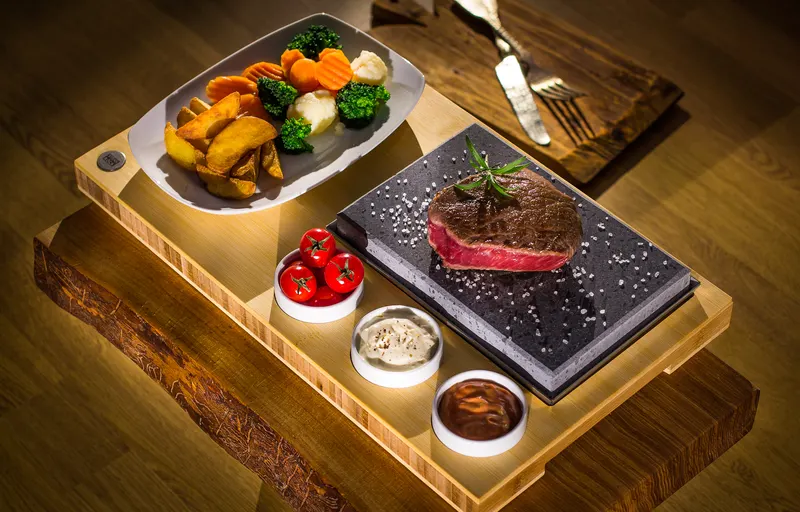
With Stonegrill, part of the cooking process is deliberately moved to the table. For instance, the guest decides how long the meat continues to cook on the hot stone. This makes the meal more interactive than a fully finished main course.
You must check this
- Does table cooking fit our restaurant?
- Do we want our guests to be actively involved in the cooking process?
- Does the presentation fit our positioning?
- Will Stonegrill be a signature dish or a larger part of the menu?
Which dishes do we want to offer?
Define the gastronomic offer first – then choose the appropriate equipment.
Before models, stones or accessories are chosen, it must be clear which dishes will actually be offered.
Think, for example, of various meat dishes, fish, seafood, vegetables or combinations thereof. The most important thing is that the concept can be executed clearly and reproducibly in daily practice.
Questions about the menu
- Which main products are served on the stone?
- Which portion sizes are planned?
- Which side dishes are served separately?
- Which sauces belong to the concept?
- Which vegetarian alternatives are appropriate?
- How is the dish presented on the menu?
How much space do we actually have on the table?
A Stonegrill set should not only look good but also fit the actual table situation.
Stonegrill requires more than just space for the grill stone. Depending on the design, this includes the platter, sauces, sides, cutlery, glasses, drinks, and potentially extra plates.
Lay a table exactly as it will be used later during service. Then place the desired number of Stonegrill sets on the table. This way, you can quickly see if there is enough space left for guests, drinks, and service.
The table test
- Is there enough room for drinks?
- Can guests eat comfortably?
- Does the service team have enough space to serve?
- Does the table situation also work when multiple guests order Stonegrill?
How many stone grilling orders do we expect at the same time?
For planning, not only is total daily turnover relevant, but especially demand during the busiest moment of service.
A restaurant can sell a modest number of Stonegrill dishes spread over several hours and still need multiple stones at the same time during a short peak period.
For planning
- How many seats do we have?
- How many guests could order stone grilling at the same time?
- When is our busiest service moment?
- How much reserve do we want to plan for?
Which technical infrastructure is present?
The heating technique must suit the kitchen, the available electrical power, the available space, and the system actually used.
Technical requirements differ per solution. Temperatures, electrical connection ratings, and oven capacities should therefore not be applied from one system to another without verification.
Check before ordering
- Which power connections are present?
- Where can the heating technology be placed?
- Is there sufficient workspace available?
- Is the available electrical power sufficient?
- Which technical regulations apply to the relevant system?
For temperature, connected load, and capacity, always use the technical specifications of the equipment that is actually being deployed.
Does the capacity fit during the busiest moment of service?
Sets, extra stones, heating technology and desired reserve must be viewed as a whole.
A restaurant with 100 seats does not automatically need 100 Stonegrill sets. Conversely, a smaller number of sets may require extra grill stones when the concept is used intensively during peak moments.
Capacity questions
- How many orders do we expect during peak time?
- How many stones can be prepared at the same time?
- How many stones are in use with guests at the same time?
- Which reserve is sensible for our company?
How should the service team explain the concept?
For guests, the explanation must be short, clear and unambiguous.
For many guests, Stonegrill is self-explanatory, for others it may be new. The service team must therefore be able to explain how the dish is intended, which components are hot and how the guest themselves has influence on the degree of doneness.
Service check
- Does every employee know how the system works?
- Is there a short standard explanation?
- Does the team know which parts are hot?
- Can the team answer common questions from guests well?
How do we deal with hot components?
The procedure regarding hot grill stones must be clear before the first service.
Stonegrill works with highly heated grill stones. Therefore, suitable tools, safe storage locations, walkways, and the regulations of the relevant system must be taken into account.
Safety questions
- Which designated tools are needed?
- Where are the hot stones placed?
- Where may hot components be placed?
- Are the walking routes suitable?
- Has the team been well instructed for this?
- Which instructions apply to the relevant system?
How do we integrate stone grilling into our hygiene plan?
Existing processes for food hygiene remain applicable when using Stonegrill.
Important aspects include the separation of raw and ready-to-eat food and the cleaning of contact surfaces and used materials.
Hygiene check
- Where are raw products prepared?
- Which materials are used for that?
- How are raw products separated from ready-to-eat components?
- How are used components returned?
- How is stone grilling included in the existing cleaning plan?
How are stones, platters and accessories cleaned?
This question must be answered before purchase – not after the first service.
Stonegrill systems consist of various materials and components, depending on the version. Therefore, the corresponding maintenance and cleaning instructions must be followed for each part.
Questions about cleaning
- How is the grill stone cleaned?
- Which components are dishwasher safe?
- Which components are cleaned by hand?
- Do certain parts need to cool completely first?
- Where can cleaned components dry?
- How are clean and used components separated from each other?
Where are sets, stones and accessories stored?
Stonegrill not only needs space on the table, but also behind the scenes.
Think of grill stones, trays, porcelain, accessories, gripping tools, and any spare parts.
Storage check
- Is there sufficient dry storage space?
- Are all components quickly accessible for the team?
- Can clean sets be prepared efficiently?
- Is there space for spare stones and parts?
Have we tested the concept in practice yet?
An internal practical test shows whether the planned solution functions well under the actual conditions in your restaurant.
It is not about adopting a universal procedure. Kitchen and service teams must test how the system works best in their own practice.
Practical test
- Does the dish fit well on the table?
- Does the presentation work?
- Can the service team work well with the set?
- Are all components available at the right time?
- Does the return flow work well?
- Is cleaning practically feasible within the company itself?
The compact 12-point checklist
If you can answer these twelve questions, you already have a good basis for the concrete Stonegrill configuration.
First assess the business operations, then choose the equipment
Successfully introducing Stonegrill in a restaurant does not start with choosing a platter. First, the restaurant concept, menu, table space, capacity, technical requirements, staff, safety, cleaning, and storage must be examined.
Only then can it be properly determined which Stonegrill configuration actually fits the restaurant.
Frequently asked questions about introducing Stonegrill
That depends on the chosen concept. Basically, factors such as the serving system, suitable grill stones, a suitable heating solution, and the necessary accessories must be taken into account. In addition, table space, capacity, waiting staff, cleaning, and storage must be planned.
That cannot be determined solely on the basis of the number of seats. Especially relevant is how many guests could potentially order Stonegrill at the same time during the busiest moment of the service.
That depends, among other things, on the number of simultaneously used sets, heating capacity, and desired reserve. A fixed standard quantity is therefore not meaningful.
The required temperature depends on the stone used, the heating method, and the total system. For this, restaurants must follow the technical regulations of the actually used system.
For each restaurant, it must be assessed whether the concept fits the kitchen, table situation, target audience, infrastructure and service.
Proper cleaning depends on the material and system used. Therefore, always follow the manufacturer's relevant maintenance and cleaning instructions.
The team must be familiar with the correct operation of the system, the manufacturer's instructions, explaining it to guests and handling hot components.
An internal practical test with kitchen and waiting staff is sensible to check whether the chosen solution functions well in the actual restaurant environment.
Would you like to introduce Stonegrill in your restaurant?
Let us know how many seats you have, the table dimensions, how you want to use Stonegrill, and the usage intensity you expect. Based on this, we can determine together which Stonegrill configuration suits your restaurant.
Request advice View restaurant solutions